Building a strong vocabulary starts with learning the right words and verbs are among the most important. If you’re searching for verbs that start with B, you’re in the right place. Verbs describe actions, events or states, making them essential for speaking, writing and understanding English effectively.
From everyday verbs like buy, bring and build to advanced words like broaden, balance and broadcast, the letter B offers plenty of useful verbs for students, writers, teachers and English learners. This guide includes common and advanced B verbs, their meanings, example sentences and practical tips to help you use them confidently.
Quick Answer
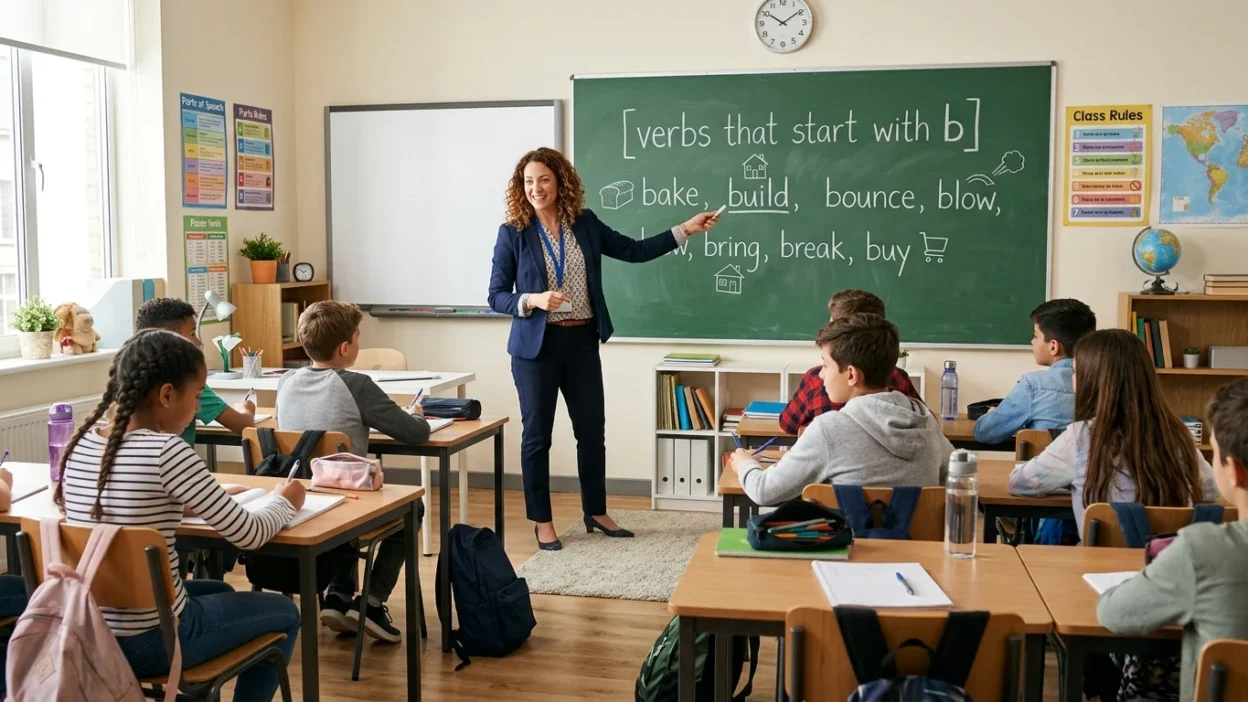
Some common verbs that start with B include bake, balance, ban, bargain, bathe, be, beat, become, begin, believe, belong, bend, bet, bind, bite, bleed, bless, blink, blow, boil, borrow, bounce, bow, break, breathe, breed, bring, build, burn, bury, burst, buy and buzz.
Why Learn Verbs That Start With B?
Learning B verbs helps you:
- Expand your vocabulary.
- Improve speaking and writing skills.
- Express ideas more accurately.
- Perform better in school and exams.
- Enhance professional and creative communication.
The more verbs you know, the more naturally you can communicate in English.
Common Verbs That Start With B
Here are some of the most frequently used verbs beginning with B.
| Verb | Meaning |
|---|---|
| Bake | To cook in an oven |
| Balance | To keep steady |
| Ban | To officially prohibit |
| Bargain | To negotiate |
| Bathe | To wash oneself or another |
| Be | To exist |
| Bear | To carry or endure |
| Beat | To strike repeatedly |
| Become | To grow into |
| Beg | To ask earnestly |
| Begin | To start |
| Behave | To act |
| Believe | To accept as true |
| Belong | To be owned by |
| Bend | To curve |
| Bet | To wager |
| Bind | To tie together |
| Bite | To cut with the teeth |
| Bleed | To lose blood |
| Bless | To give approval or protection |
| Blink | To close and open the eyes |
| Blow | To move air |
| Blush | To become red in the face |
| Boil | To heat a liquid |
| Borrow | To take temporarily |
| Bounce | To spring back |
| Bow | To bend forward |
| Break | To separate into pieces |
| Breathe | To inhale and exhale |
| Breed | To reproduce |
| Bring | To carry toward |
| Broadcast | To transmit information |
| Broaden | To make wider |
| Build | To construct |
| Burn | To be on fire |
| Bury | To place underground |
| Burst | To break open suddenly |
| Buy | To purchase |
| Buzz | To make a humming sound |
Advanced Verbs That Start With B
Expand your vocabulary with these advanced B verbs:
- Backfire
- Backtrack
- Balance
- Befriend
- Befuddle
- Behold
- Belittle
- Benchmark
- Benefit
- Bewilder
- Bifurcate
- Bolster
- Border
- Bottle
- Boycott
- Branch
- Brand
- Brave
- Breeze
- Brighten
- Brood
- Browse
- Budget
- Buffer
- Bulldoze
- Bundle
- Burden
- Bustle
- Buttress
- Button
- Bypass
Positive Verbs That Start With B
These verbs have encouraging or constructive meanings:
- Believe
- Belong
- Bless
- Bloom
- Bolster
- Boost
- Brighten
- Build
- Befriend
- Benefit
- Balance
- Broaden
- Bring
- Breathe
- Bond
Business and Professional Verbs That Start With B
These B verbs are common in the workplace:
- Balance
- Benchmark
- Benefit
- Boost
- Brand
- Brainstorm
- Brief
- Broadcast
- Budget
- Build
- Buy
- Bargain
- Bundle
- Back up
- Benchmark
Examples (10+)
- She baked a chocolate cake.
- Try to balance your work and personal life.
- They banned smoking indoors.
- We began the meeting on time.
- I believe your idea will succeed.
- The book belongs to Sarah.
- Bend your knees before you jump.
- The dog bit the toy.
- Plants need water to bloom.
- We built a treehouse together.
- Please bring your notebook tomorrow.
- He bought a new laptop.
Common Mistakes
Avoid these common errors:
❌ Confusing borrow and lend.
- Borrow = Receive temporarily.
- Lend = Give temporarily.
❌ Confusing bring and take.
- Bring = Toward the speaker.
- Take = Away from the speaker.
❌ Using the wrong tense.
Incorrect:
- She begin work yesterday.
Correct:
- She began work yesterday.
Memory Trick
Remember B verbs by grouping them into themes:
- Building: build, bolster, broaden
- Believing: believe, belong, bless
- Buying: buy, bargain, borrow
- Beginning: begin, become, be
Learning related verbs together makes them easier to remember.
American vs British English
Most B verbs are spelled the same in American and British English.
However, some past-tense forms differ:
- Burned (American English) vs Burnt (commonly accepted in British English)
- Broadcast remains broadcast in both varieties, though context may affect usage.
The base verbs themselves are generally identical.
Similar Vocabulary Lists
To continue building your vocabulary, explore:
- Verbs That Start With A
- Verbs That Start With C
- Verbs That Start With D
- Positive Verbs
- Action Verbs
- Strong Verbs for Writing
- Irregular Verbs
Final Verdict
Learning verbs that start with B is an excellent way to expand your English vocabulary. Whether you’re using everyday verbs like begin, bring and buy or advanced ones like bolster, broadcast and benchmark, these words help you communicate more clearly and effectively.
The best way to master new verbs is to use them regularly in conversations and writing. Practice a few each day, and they’ll quickly become part of your active vocabulary.
FAQs
What are some common verbs that start with B?
Examples include bake, balance, begin, believe, bend, bite, blink, blow, boil, borrow, break, breathe, bring, build, burn, and buy.
What are some positive verbs that start with B?
Positive B verbs include believe, bless, bloom, bolster, boost, brighten, build, befriend, and benefit.
Which B verbs are useful in business English?
Useful business verbs include benchmark, budget, brainstorm, brief, brand, benefit, broadcast, and build.
Are there irregular verbs that start with B?
Yes. Examples include be (was/were, been), begin (began, begun), bear (bore, borne), bite (bit, bitten), break (broke, broken), bring (brought, brought), and buy (bought, bought).
How can I remember new verbs?
Practice using them in sentences, group similar words together, and review them regularly.
Are all B verbs action verbs?
No. Some describe actions, while others express states or conditions, such as be, believe, and belong.
Conclusion
Verbs beginning with B play a vital role in everyday English, covering everything from simple actions like bake and buy to more advanced concepts like benchmark and bolster. Learning these verbs will strengthen your vocabulary and make your communication more effective.
To retain them, use the verbs in conversations, writing exercises and daily reading. Consistent practice is the key to building confidence and fluency in English.
Remember This
B verbs help you begin, build, believe, and become a more confident English speaker.
Learn a few new verbs every day and use them in real sentences to make them stick.