The phrase “these days” is commonly used in English to talk about the present time, current habits, modern life or situations that are different from the past. You might hear someone say, “People shop online more frequently these days” or “I feel tired these days.” In both examples, the phrase refers to the current period rather than one specific day. Although it looks simple, understanding how to use these days correctly can help you sound more natural in conversations, emails, essays and everyday writing.
One important feature of this expression is that it often appears with the present simple or present continuous tense, depending on what the speaker wants to communicate. It can describe general trends, repeated habits, temporary situations and changes in people’s lives. It is also frequently used when comparing the present with the past. In this guide, you will learn the meaning of these days, its grammatical usage, common sentence patterns, differences from similar expressions and examples that show how to use it confidently.
Quick Answer: What Does “These Days” Mean?
“These days” means “at the present time” or “during the current period.” It is used to describe current habits, trends, circumstances, or temporary situations. For example “I work from home these days” means that working from home is part of the speaker’s current routine. The phrase often contrasts the present with the past.
Why People Confuse “These Days”
People sometimes confuse these days with expressions such as today, nowadays, these day, and in these days. Although some of these expressions are related, they are not always interchangeable.
The main distinction is that these days usually refers to a period around the present, while today can refer to the current calendar day. For example:
- These days: I read more books these days.
- Today: I am reading a book today.
The first sentence describes a current habit. The second refers to an activity happening on or planned for the current day.
Another common mistake is using the singular form these day. Because these is plural, the correct expression is these days.
What Does “These Days” Mean?
The phrase these days is an adverbial expression of time. It tells the reader or listener when something happens or when a situation is true.
It has three common uses.
1. To Describe Current Habits
Use these days to describe what someone regularly does during the current period.
Examples:
- I drink more water these days.
- She walks to work these days.
- We rarely watch television these days.
2. To Describe Modern Trends
Use it to talk about changes in society, technology, communication, or everyday life.
Examples:
- Many people use smartphones these days.
- Online shopping is popular these days.
- People communicate differently these days.
3. To Describe a Current Situation
Use these days when something is true for you or someone else during the present period, even if it is temporary.
Examples:
- I’m very busy these days.
- He’s staying with his parents these days.
- We’re saving money these days.
How to Use “These Days” in a Sentence
The phrase is flexible and can appear in different parts of a sentence.
At the End of a Sentence
This is one of the most common positions.
- I exercise regularly these days.
- She seems happier these days.
- People spend more time online these days.
At the Beginning of a Sentence
You can place these days at the beginning to emphasize the current period.
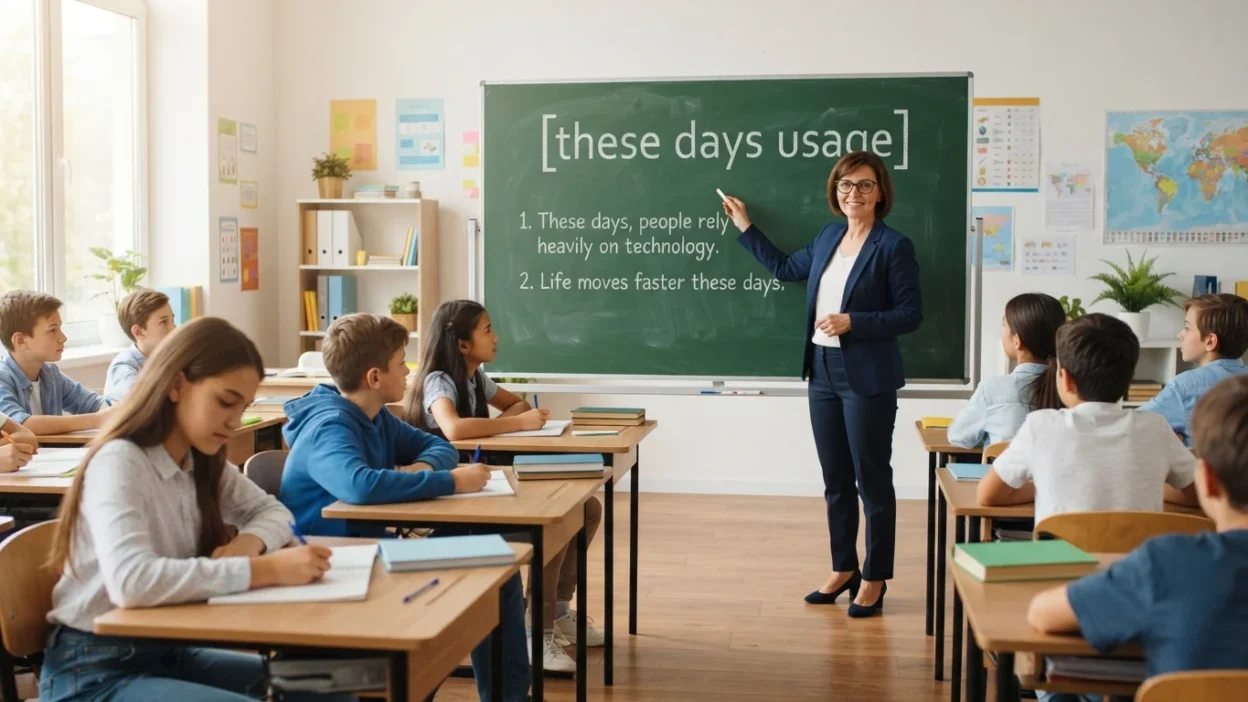
- These days, many students study online.
- These days, life moves very quickly.
- These days, I prefer quiet evenings at home.
A comma is often used after the introductory phrase, especially when it sets the context for the whole sentence.
In the Middle of a Sentence
The phrase can also appear in the middle when the sentence structure allows it.
- People these days often prefer digital payments.
- Young adults these days face many challenges.
- We these days rely heavily on technology.
The last example is grammatical but may sound less natural than “These days, we rely heavily on technology.”
Which Tense Is Used With “These Days”?
The phrase these days can be used with different tenses, but the present simple and present continuous are especially common.
Present Simple
Use the present simple for general habits, routines, and current trends.
- I work from home these days.
- She prefers tea these days.
- Many businesses use artificial intelligence these days.
Present Continuous
Use the present continuous for temporary situations or activities happening during the current period.
- I’m working longer hours these days.
- She’s preparing for an important exam these days.
- We’re staying with relatives these days.
Present Perfect
The present perfect can be used when emphasizing a change or development that has occurred over time and remains relevant now.
- I’ve been feeling tired these days.
- I’ve noticed more people cycling to work these days.
For a situation continuing throughout a recent period, the present perfect continuous may also be natural:
- I’ve been working late a lot these days.
The best tense depends on the meaning you want to express, not merely on the presence of these days.
Comparison Table: These Days vs Similar Expressions
| Expression | Meaning | Example |
|---|---|---|
| These days | During the current period | I read more these days. |
| Nowadays | In the present era or current period | Nowadays, many people work remotely. |
| Today | On the current day; sometimes the present era in broad contexts | I’m busy today. |
| Now | At this moment or in the current situation | I can’t talk now. |
| At present | Currently; often more formal | The service is unavailable at present. |
| These day | Incorrect in standard English for this meaning | Use “these days” instead. |
These days and nowadays are often interchangeable when discussing general trends, though nowadays can sound slightly more focused on modern life or historical change.
When to Use “These Days”
Use the phrase when you want to communicate that something is true or happening during the current period.
To Describe a Habit That Has Changed
- I cook at home more often these days.
- He spends less time playing video games these days.
- We go out less frequently these days.
To Describe a Temporary Situation
- I’m studying hard these days.
- She’s working on a new project these days.
- They’re living in a small apartment these days.
To Discuss Modern Life
- People depend on technology more these days.
- Many jobs require digital skills these days.
- It’s easier to learn new skills online these days.
To Compare the Present With the Past
- I don’t watch as much television as I did in the past; I listen to podcasts more these days.
- People communicate differently these days than they did twenty years ago.
- Life seems faster these days than it used to.
Examples of “These Days” in Sentences
Here are 15 examples showing how to use the phrase naturally.
- I feel much better these days.
- She reads the news online these days.
- These days, many people work remotely.
- We don’t eat out very often these days.
- My brother is studying for his exams these days.
- Children spend a lot of time using digital devices these days.
- I’m trying to get more sleep these days.
- These days, you can learn almost anything online.
- He doesn’t visit us as often these days.
- I’m working on improving my English these days.
- Many companies offer flexible working hours these days.
- Life is more expensive these days than it was a few years ago.
- She has been feeling stressed these days.
- We are spending more time together these days.
- People are becoming more aware of environmental issues these days.
All these sentences use these days to refer to the current period, although the tense varies according to the intended meaning.
Common Mistakes
Mistake 1: Writing “These Day”
Incorrect: I am very busy these day.
Correct: I am very busy these days.
Use the plural noun days with these.
Mistake 2: Using “In These Days” Unnecessarily
Less natural: In these days, people use smartphones frequently.
More natural: These days, people use smartphones frequently.
In ordinary modern English, these days generally does not need in before it. The phrase in these days can occur in older or particular literary contexts, but it is not the usual choice for everyday statements about the present.
Mistake 3: Confusing “These Days” With “Today”
Incorrect for a recurring habit: I go jogging today. (If you mean it is your current routine.)
Better: I go jogging these days.
Use today for the current day and these days for a broader period around the present.
Mistake 4: Assuming “These Days” Always Requires the Present Continuous
Incorrect assumption: You must say “I am working from home these days.”
Actually, both of these can be correct:
- I work from home these days. (A current routine.)
- I’m working from home these days. (A temporary or current arrangement.)
Choose the tense that best expresses your meaning.
Memory Trick
Remember this simple rule:
These days = during the current period.
- For a current habit: “I exercise more these days.”
- For a temporary situation: “I’m very busy these days.”
- For a modern trend: “People shop online these days.”
If you mean only one calendar day, today may be more appropriate. If you mean the current era or general modern life, nowadays is another useful choice.
American vs British English
There is no major difference in the meaning or basic grammar of these days between American and British English. Both varieties use the phrase naturally in conversation and writing.
Examples in American English:
- I’m working from home these days.
- People use digital payments more often these days.
Examples in British English:
- I’m working from home these days.
- People use digital payments more often these days.
The expression is also widely used in other varieties of English. Regional differences are generally more noticeable in accent and surrounding vocabulary than in this phrase itself.
Similar Expressions
Here are several expressions that can replace these days, depending on the context.
- Nowadays: In the present era or current period.
- Currently: At the present time; often more formal.
- At the moment: Right now or during the current period.
- At present: Currently, often in formal writing.
- Lately: During the recent past, often with the present perfect.
- Recently: Not long ago or during a recent period.
- In recent years: During the last several years.
- Today: On the current day, or sometimes the modern era in broad statements.
These expressions are related, but they do not always mean exactly the same thing. For example, lately often refers to recent experiences or changes, while these days commonly describes current habits or circumstances.
Final Verdict
“These days” is a correct and natural English expression meaning “during the current period” or “at the present time.” It can describe habits, temporary circumstances, social trends, and changes between the present and the past. It is commonly used with the present simple and present continuous, although other tenses can also be appropriate.
Remember This: Say these days, not these day. Use it for the current period, and choose the tense according to whether you are describing a habit, a temporary situation, or a change.
FAQs
1. What does “these days” mean?
“These days” means during the current period or at the present time. It often describes current habits, trends, or circumstances.
2. Is “these days” grammatically correct?
Yes. These days is a standard and widely used English expression.
3. Should I say “these day” or “these days”?
Use these days. The word these is plural, so it takes the plural noun days in this expression.
4. Which tense is commonly used with “these days”?
The present simple is common for habits and general trends, while the present continuous is common for temporary situations. Other tenses can also be used when the meaning calls for them.
5. What is the difference between “these days” and “nowadays”?
Both can refer to the present period. Nowadays often emphasizes modern life or a general change over time, while these days is especially common for current routines and circumstances.
6. Can I begin a sentence with “these days”?
Yes. For example: “These days, many people work remotely.” A comma is commonly used after the introductory phrase.
7. Is “in these days” correct?
It is possible in certain older or specific literary contexts, but it is generally unnatural in everyday modern English when you mean “currently.” Usually, say “These days, people communicate online.”
Conclusion
The phrase these days is a useful expression for talking about the present period. It can describe personal routines, temporary situations, social trends and changes that distinguish the present from the past. Its meaning is similar to nowadays but it is particularly natural when discussing how people live or what someone is doing during the current period.
To use it correctly, remember that these days refers to a broader period than today. Use the present simple for regular habits and general trends and the present continuous for temporary arrangements or ongoing activities. With these patterns in mind, you can use the phrase confidently in everyday conversations and formal or informal writing.